

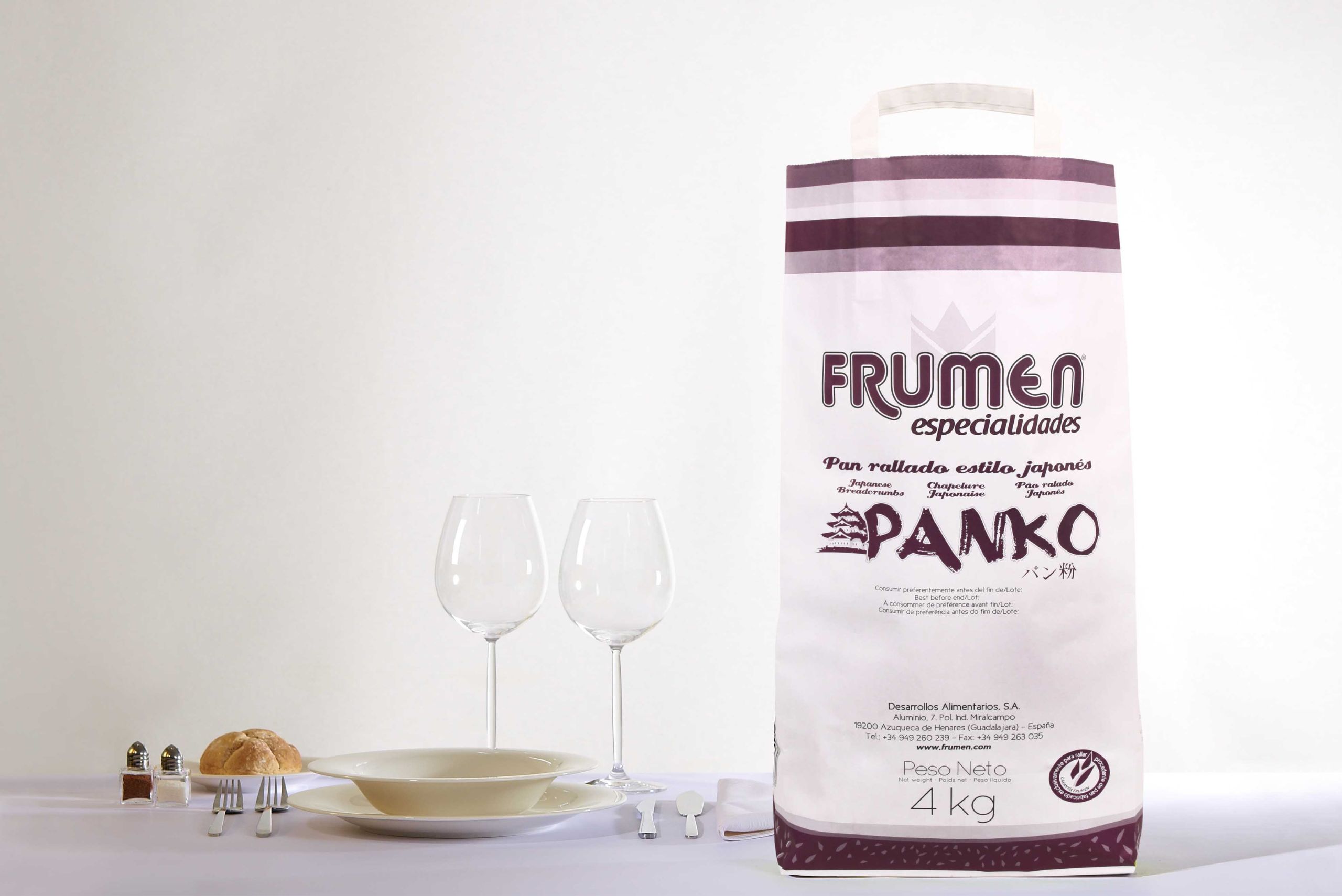
Panko, the Japanese-origin breadcrumb, has become a key ingredient in the European food industry. At Frumen, we offer this type of breadcrumb with a distinctive flake-like texture that creates an attractive coating and delivers a light, crunchy bite. It is suitable for all types of food: vegetables, meats, fish, and more.
The unique characteristics of this product have won over both consumers and chefs, driving its integration into B2B food production chains.
What Is Panko and why is it relevant in food developments?
Panko is a cutting-edge type of breadcrumb with unique characteristics. Its special production process creates longer, airier crumbs. This gives it an exceptionally light and crispy texture after cooking, making it particularly popular for breaded products.
Panko is made from simple ingredients, but its quality depends on the proportion and manufacturing process. The main components include:
- Wheat flour: The fundamental base that defines the structure of the bread.
- Water and salt: Essential for cohesion and flavor.
- Yeast: Provides the fluffy texture.
Adhesive application: the key to perfect coating
One of the technical challenges in the B2B industry is ensuring proper adhesion of Panko to food products. This is achieved through the application of adhesives or coating solutions. The process involves several steps:
- Preparation of the adhesive: Typically composed of water, modified starches, and gelling agents to ensure even adhesion.
- Product immersion: The food item—such as meat, fish, or vegetables—is dipped into the adhesive to create a uniform layer.
- Application of Panko: Using automated systems, the crumbs adhere to the product, ensuring complete and even coverage.
- Drying or pre-cooking: In some production lines, the product undergoes a drying stage before being frozen.
Panko’s response to consumer trends
The rise of Panko aligns with key consumer trends in Europe, such as:
- Demand for unique textures: Panko’s crispiness enhances the sensory experience for consumers.
- Healthy eating: Variants like whole-grain Panko or gluten-free options cater to the demand for healthier choices.
- Innovation in prepared foods: Companies are increasingly using Panko in products like nuggets, croquettes, and breaded fillets.
- Growth in foodservice: Restaurants and fast-food chains adopt Panko for its versatility and ease of use.
Considerations for food developments
The success of Panko in the food industry depends not only on its quality but also on how companies integrate it. Key recommendations include:
- Research and development: Create innovative variants to capture new markets.
- Sustainability: Use responsible ingredients and minimize waste.
- Strategic marketing: Communicate the benefits of Panko to the B2B audience and end consumers.
Panko represents a unique opportunity in food developments, allowing B2B companies to stand out in a competitive market. Its crispy texture, versatility, and adaptability to various trends make it an essential ingredient. Integrating Panko into production chains not only improves final products but also directly addresses current consumer demands.
If you want to learn more about how we can create a tailored development to make your product stand out in the market… contact us!
Leave A Comment